
How to Store Fresh Herbs Longer: Expert Tips and Tricks
Fresh herbs are a delightful addition to many dishes, enhancing flavors and providing a touch of greenery to your meals. However, herbs can be quite perishable, and if not stored correctly, they can quickly wilt, lose their fragrance, or even spoil. Whether you’ve bought a bundle from the market or grown your own, proper storage is key to ensuring that your herbs stay fresh and flavorful for as long as possible. In this article, we will discuss the best techniques for store fresh herbs longer, helping you extend their shelf life and enjoy their vibrant flavors in your cooking for weeks.
Why Do Fresh Herbs Spoil Quickly?
Fresh herbs contain high water content and are sensitive to temperature, humidity, and air exposure. They begin to lose their moisture and flavor once they are harvested, and improper storage accelerates this process. Herbs such as basil, cilantro, and parsley are particularly prone to wilting or turning brown when not stored correctly.
General Tips for Storing Fresh Herbs
Before diving into specific methods for different types of herbs, here are some general tips to help you store fresh herbs properly:
- Trim the Stems: When you bring herbs home, trim the ends of the stems. This helps improve water absorption and keeps the herbs hydrated.
- Don’t Wash Immediately: Only wash fresh herbs just before use. Washing them too early can make them soggy, promoting mold growth and shortening their shelf life.
- Keep Them in a Cool, Dry Place: Herbs should be kept in a cool and dry environment. Direct sunlight or excessive moisture can cause them to wilt faster.
- Use Airtight Containers: For most herbs, using airtight containers or wrapping them in paper towels can help maintain freshness by reducing exposure to air.
Now, let’s explore the best ways to store fresh herbs based on their specific needs.
1. Storing Soft Herbs (e.g., Cilantro, Parsley, Basil)
Soft herbs are delicate and need a bit more care in storage compared to woody herbs. They can wilt easily, especially basil, which is very sensitive to cold temperatures.
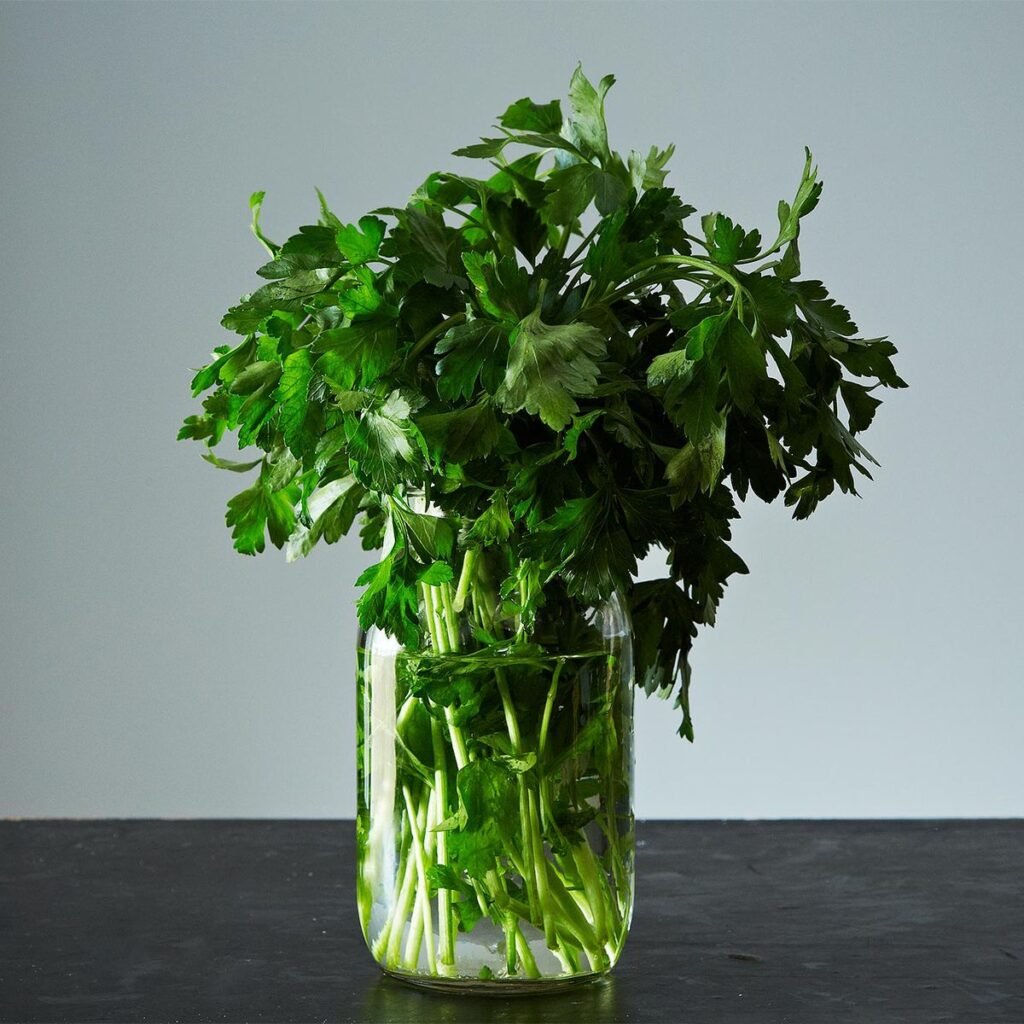
Method 1: In a Jar with Water (Like Flowers)
This method is ideal for herbs like basil, parsley, and cilantro. It allows the herbs to stay hydrated and continue absorbing water, which helps them remain fresh.
How to do it:
- Trim the stems of the herbs by about an inch.
- Place the herbs in a jar or glass with enough water to cover the stems.
- Cover the herbs loosely with a plastic bag or wrap them in a damp paper towel to create a humid environment.
- Store the jar in the refrigerator (for parsley and cilantro) or on the kitchen counter (for basil).
- Change the water every 2–3 days.
Method 2: In the Refrigerator Wrapped in a Damp Paper Towel
For delicate herbs like cilantro and parsley, this method helps keep them hydrated while minimizing exposure to moisture.
How to do it:
- Trim the stems and wrap the herbs in a damp paper towel.
- Place the wrapped herbs inside a resealable plastic bag or airtight container.
- Store them in the vegetable crisper drawer of your refrigerator.
- Change the paper towel if it gets too soggy or dry.
Shelf life: Basil can last about 2-3 days at room temperature (in water), while parsley and cilantro can last 1-2 weeks in the refrigerator.
2. Storing Woody Herbs (e.g., Rosemary, Thyme, Oregano, Sage)
Woody herbs have more durable, woody stems that don’t require as much water as soft herbs. These herbs can tolerate refrigeration but still benefit from the right storage methods.
Method 1: In the Refrigerator with a Damp Paper Towel
This method works for herbs like rosemary, thyme, oregano, and sage. It helps to retain the herbs’ moisture without allowing them to become soggy.
How to do it:
- Trim the stems and wrap the herbs in a damp paper towel.
- Place the wrapped herbs in a plastic bag or an airtight container.
- Store them in the refrigerator, ideally in the crisper drawer.
- Replace the damp towel as needed.
Method 2: In a Jar with Water (For Rosemary and Thyme)
Like soft herbs, rosemary and thyme can also be stored in water to prolong their freshness.
How to do it:
- Trim the woody stems and place them in a jar with water covering the bottom of the stems.
- Loosely cover the herbs with a plastic bag.
- Store the jar in the refrigerator.
- Change the water every couple of days.
Shelf life: Woody herbs can last 1-2 weeks in the refrigerator when stored with a damp paper towel, and up to 2 weeks when stored in water.
3. Freezing Herbs for Long-Term Storage
If you have an excess of herbs or want to store them for several months, freezing them is a great option. Freezing can preserve the flavor of the herbs, although the texture may change once thawed. This method is especially helpful for herbs used in cooking, such as thyme, oregano, and rosemary.
Method 1: Freezing Whole Herbs in Ice Cube Trays
This method is perfect for herbs that you will use in cooking, as the flavor is preserved even if the texture is slightly altered.
How to do it:
- Finely chop the herbs.
- Place the chopped herbs in an ice cube tray, filling each compartment.
- Pour olive oil, water, or stock over the herbs to cover them.
- Freeze the tray for several hours or overnight.
- Once frozen, transfer the herb cubes into a resealable bag or airtight container.
Method 2: Freezing Fresh Herbs in Plastic Bags
You can also freeze whole herbs by simply placing them in plastic bags.
How to do it:
- Wash and dry the herbs thoroughly.
- Place the whole herbs in a resealable plastic bag, ensuring as much air as possible is removed.
- Seal the bag and place it in the freezer.
- Label the bag with the herb name and date for easy reference.
Shelf life: Herbs can last up to 6 months in the freezer. For best flavor, use them within 3-4 months.
4. Drying Herbs for Long-Term Storage
If you don’t want to freeze your herbs or prefer a method that doesn’t require space in the freezer, drying them is a good option. Dried herbs are perfect for use in cooking and can last for months when stored properly.
How to dry herbs:
- Tie a bunch of herbs together with string and hang them upside down in a cool, dry area with good airflow.
- Alternatively, you can use a food dehydrator or an oven on low heat to speed up the drying process.
- Once the herbs are completely dried, store them in an airtight container, away from sunlight, in a cool, dry place.
Shelf life: Dried herbs can last up to 1 year if stored properly.
5. Herb Preservation in Oil or Vinegar
For long-term storage and added flavor, you can preserve certain herbs in oil or vinegar. This method works best for herbs like basil, rosemary, and thyme.
How to do it:
- Place fresh herbs in a sterilized jar.
- Cover them with olive oil or vinegar, ensuring the herbs are completely submerged.
- Seal the jar tightly and store it in the refrigerator.
- Use the infused oil or vinegar within a few weeks for the best flavor.
Shelf life: Preserved herbs in oil or vinegar should be used within 1-2 weeks, as they may spoil after that time.
Conclusion
Storing fresh herbs properly can significantly extend their shelf life, allowing you to enjoy their flavor and aroma for longer. Whether you’re using methods like refrigerating with damp towels, freezing in ice cube trays, or drying, each technique has its advantages depending on the type of herb and how you plan to use it. By following these expert tips, you can keep your fresh herbs vibrant and flavorful, ensuring that they enhance your meals for weeks or even months to come.