
How to Clean a Burnt Enamel Pot: A Comprehensive Guide
Enamel pots are beloved for their durability, even heat distribution, and aesthetic appeal. However, over time, it’s easy for food to stick to the bottom, especially when cooking at high temperatures. Burnt enamel pots, while tough, can be a hassle to clean. The good news is, with the right approach and a few simple tools, you can restore your enamel pot to its former glory. In this article, we will guide you through effective methods for cleaning a burnt enamel pot, ensuring that it’s both functional and looking great for years to come.
Why Do Enamel Pots Burn?
Enamel-coated cookware is made from metal (usually cast iron or steel) that has been coated with a layer of enamel, a type of glass. This smooth, non-reactive surface helps prevent food from sticking and makes the pot easier to clean. However, enamel can get burnt or stained when exposed to high heat for too long or when food gets stuck and burns.
The key to successfully cleaning a burnt enamel pot is understanding that enamel is delicate, and aggressive cleaning methods can damage the surface. However, with patience and the right techniques, you can clean your pot without causing further harm.
Step-by-Step Guide to Clean a Burnt Enamel Pot
1. Allow the Pot to Cool
Before attempting any cleaning method, let the pot cool down to room temperature. Sudden changes in temperature can cause the enamel to crack or chip, so always wait for your pot to cool down completely before starting the cleaning process.
2. Soak the Pot
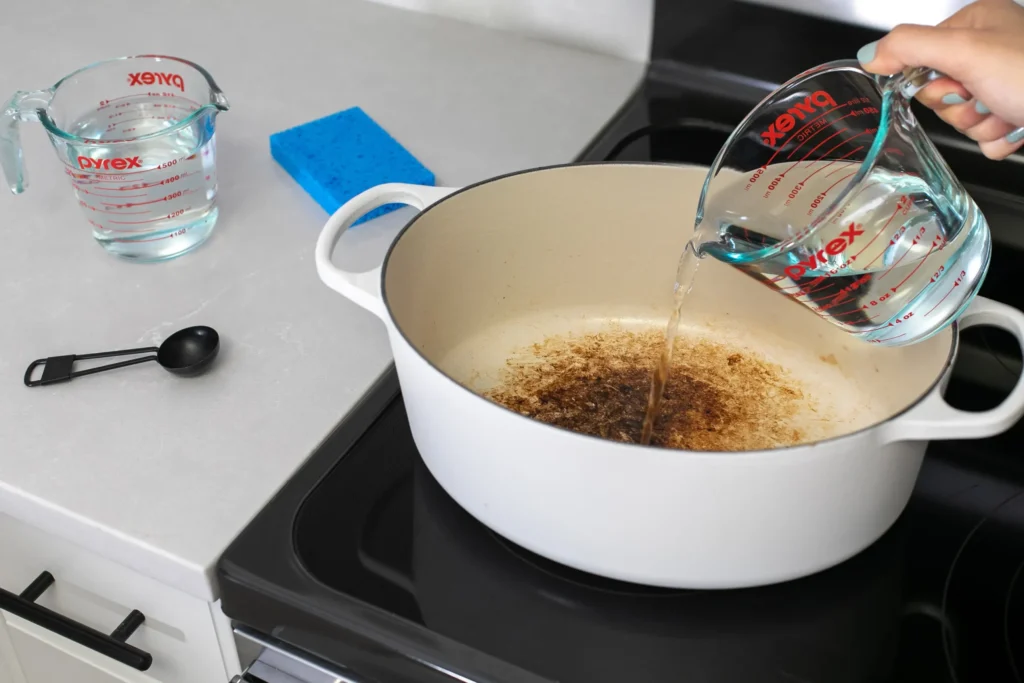
One of the simplest and most effective ways to begin the cleaning process is by soaking the burnt pot. Soaking helps to loosen the burnt food particles, making the cleaning process much easier.
How to soak:
- Fill the pot with warm water, enough to cover the burnt areas.
- Add a few drops of dishwashing liquid or a tablespoon of baking soda (for extra cleaning power).
- Let the pot sit for at least an hour or overnight if the burn is particularly stubborn.
Soaking softens the burnt bits, making them easier to scrub away later without damaging the enamel.
3. Use Baking Soda and Vinegar for Tough Stains
For more stubborn burnt food or stains, a combination of baking soda and vinegar can work wonders. These two ingredients are natural cleaning agents that are both effective and gentle on enamel.
How to use:
- Sprinkle a generous amount of baking soda over the burnt area of the pot.
- Pour some white vinegar over the baking soda. You’ll notice some fizzing – this is normal and indicates the reaction is happening.
- Let the mixture sit for about 15-20 minutes to allow the fizzing action to lift the burnt food.
- After the bubbling has stopped, use a non-abrasive sponge or cloth to gently scrub the pot. Avoid using steel wool or harsh scrubbers, as they can scratch the enamel surface.
4. Scrape Off the Burnt Residue
After soaking and using baking soda and vinegar, much of the burnt residue should come off easily. However, some stubborn bits might still be stuck to the bottom. A non-abrasive scraper, such as a plastic spatula, can be used to gently scrape off these remaining burnt particles.
How to scrape:
- Gently run the scraper along the bottom of the pot, avoiding excessive force to prevent scratching the enamel.
- Be patient and keep scraping carefully until all the burnt food has been removed.
5. Boil Water with Baking Soda
If soaking and scrubbing don’t completely remove the burnt residue, boiling water with baking soda can be an effective solution. The boiling action helps loosen the remaining stains and burnt food, making them easier to wipe away.
How to do it:
- Fill the pot with enough water to cover the burnt area.
- Add 2-3 tablespoons of baking soda to the water.
- Bring the water to a boil and allow it to simmer for 10-15 minutes.
- After the water has cooled, use a sponge or cloth to scrub away the loosened burnt bits.
6. Use a Commercial Enamel Cleaner (Optional)
If the above methods don’t work and the stains are still present, you may want to consider using a commercial enamel cleaner. These cleaners are specifically designed to clean enamel cookware without damaging the surface. Look for a product that is labeled safe for enamel pots and pans.
How to use:
- Follow the instructions on the cleaner’s label carefully.
- Apply the cleaner to the burnt area and allow it to sit for the recommended time.
- Use a soft cloth or sponge to scrub the pot gently, then rinse thoroughly with warm water.
7. Polish the Pot (Optional)
Once the pot is cleaned, you may notice that the enamel has lost its original shine. To restore its gleam, you can use a specialized enamel polish. This step is optional, but it can help maintain the pot’s aesthetic appeal and provide a protective layer for the future.
How to polish:
- Apply a small amount of enamel polish to a soft cloth.
- Gently rub the polish onto the enamel in circular motions.
- Buff the surface until it shines and remove any excess polish.
8. Dry the Pot Thoroughly
After cleaning and polishing (if desired), make sure to dry your enamel pot completely. Leaving moisture on the surface can cause rust to form, especially on the metal parts of the pot. Use a clean, dry towel or cloth to wipe away any remaining water.
Tips for Maintaining Your Enamel Pot
To avoid future burns and stains on your enamel cookware, here are some maintenance tips:
- Avoid Cooking on High Heat: Enamel pots are sensitive to extreme temperatures. Use low to medium heat for the best results and to prevent damaging the enamel coating.
- Don’t Use Metal Utensils: Metal utensils can scratch the enamel surface. Always use wooden, silicone, or plastic utensils to avoid damaging the pot.
- Clean Immediately: The longer burnt food is allowed to sit in the pot, the harder it is to clean. Clean the pot as soon as it cools to prevent food from sticking and becoming difficult to remove.
- Store Properly: Store enamel pots in a cool, dry place to avoid any unwanted damage. Avoid stacking them with heavy pots on top, as the enamel can chip easily.
Conclusion
Cleaning a burnt enamel pot may seem daunting, but with the right tools and techniques, it’s entirely possible to restore it to its former glory. By soaking, using natural cleaning agents like baking soda and vinegar, and scrubbing carefully with non-abrasive tools, you can remove burnt food and stains without damaging the enamel surface. Additionally, taking steps to prevent future burns and stains will help extend the life of your beloved enamel cookware.
With these expert cleaning tips, you can continue using your enamel pot for years, knowing that it will always perform beautifully in the kitchen.